Designing Your First Laser Cut "Thing"
- Create Something
- Oct 22, 2020
- 2 min read
Building other peoples creations is cool, but theres something amazing about seeing something that existed in your mind come to fruition as a tangible object in front of you. When you're getting started creating things, its good to get a basic feel for how things work by starting simple then working your way up to more complex creations.

That said, once you get that itch to create, it just won't go away until youre actually creating!. Start by looking at other similar creations people have made and understand how they made it come together and look for anything that may trip you up along the way. Then once you have a general idea of how you're going to approach your creation, break it down into manageable pieces and get creating.
Designing a Laser Cut Lamp, From Concept to Creation
For this project we will be designing a Japanese style shoji lamp so the first thing we will want to do is find our inspiration for what we're looking for by searching Google Images, Pinterest, Etsy, or even online stores like Amazon. We don't have to copy what we find, we just are going to use it to inspire and guide us.
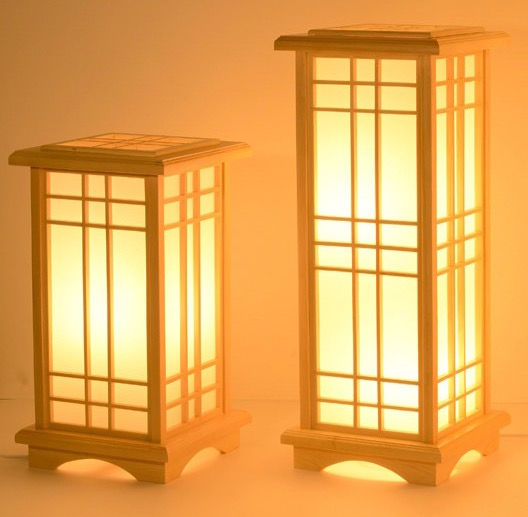
We're going to very roughly base our creation on these table lamps; they have a simple design that should be relative easy to recreate.
Now that we have our inspiration we're going to want to break it down and simplify how we are going to create this. Just as fledging artists draw people and animals as shapes then add details later, we need to approach this by first creating its framework, a box.
Creating boxes isn't as daunting as you might think; there are a number of programs, extensions, and websites you can use to create boxes and other complex shapes. Using MakerCase, we create a open box, with outside dimensions 155w x 230h x 155d and a 3mm material thickness. I have set the edge joints to finger joints with a size of 10.5mm, you can make yours larger or smaller depending on what you like.
Now that we have our basic framework for our lamp, we can open it up in Inkscape and customize it to our liking.
Planning for Hardware
asdf
asd
fasd
f
asd
Designing Your Pattern
asdf
asdf
Cutting Your Pieces
arrange the plan
cut settings
Assembling Your Lamp
Dry assembly
Sanding
Staining
adding shoji paper
Glue clamping

Comments